

PolitiCap market note — index listing TRUMPD (Donald J. Trump), member of the Republican Party US basket and, through that basket, the United States Presidential Elections composite.
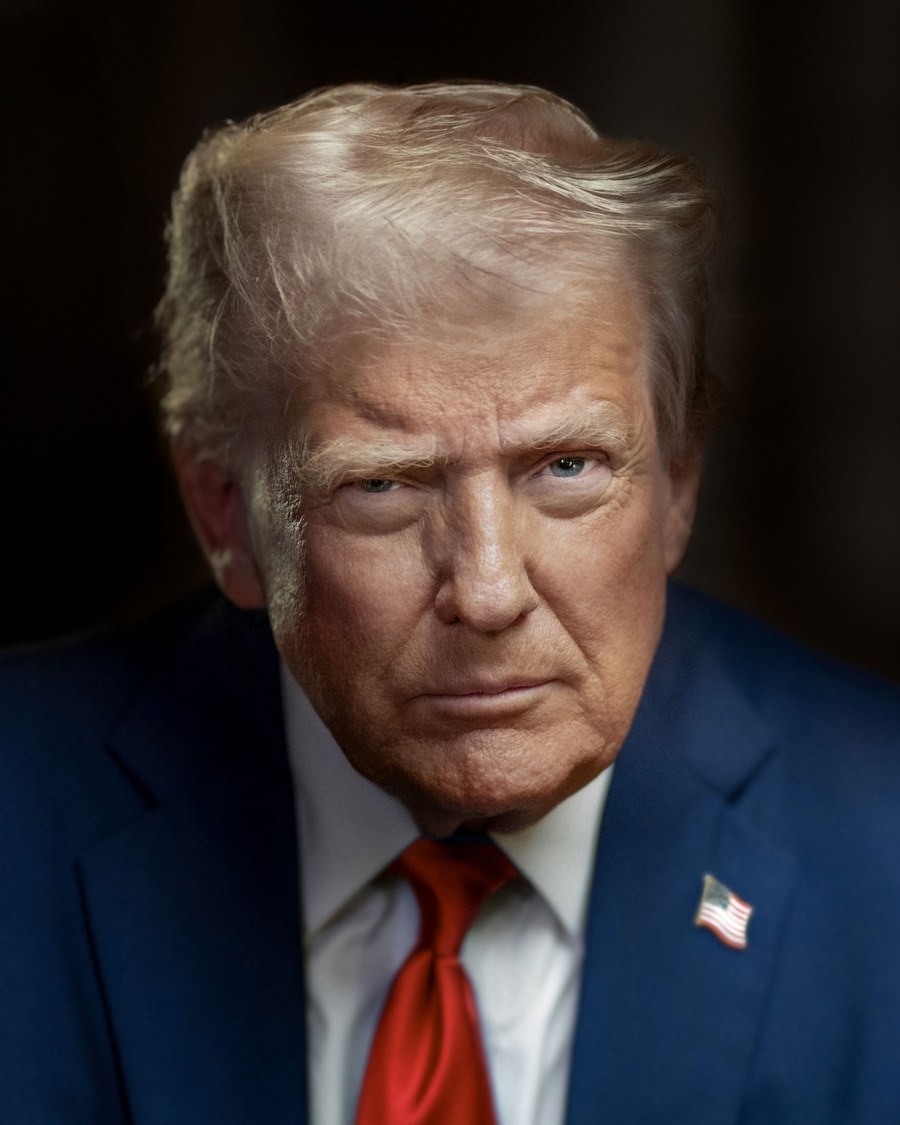
When a sitting U.S. president moves from criticizing the International Criminal Court to formal economic and travel sanctions against the Court, its officials, and people who assist its investigations, the story is not only about one docket in The Hague. It is about who gets to define the outer edge of international criminal jurisdiction—and what happens when the world’s largest military power decides that edge has crossed into its own political bloodstream.
That is the frame in which PolitiCap has listed TRUMPD: not as a verdict on any case, but as a market object for voters who want a shared, public signal of attention around decisions with global spillover.
What the sanctions signal
Sanctions against the ICC are an unusual instrument. Traditional sanctions target states, banks, or designated individuals for proliferation, terrorism, or human-rights abuses. Here the target is a treaty court created by the Rome Statute, together with the professional and civil-society ecosystem that feeds it evidence and legal work. Recent U.S. measures in this vein—and the litigation already forming around them—have drawn free-speech and due-process challenges in U.S. courts, including claims that restricting advocacy and legal assistance around ICC proceedings chills protected political speech.
For markets and diplomats, the practical content of the policy is clearer than the litigation timeline:
- Personal risk for Court personnel — asset freezes and visa bars raise the cost of holding ICC office for anyone with U.S. exposure.
- Chilling effect on intermediaries — NGOs, universities, tech vendors, and counsel who touch ICC investigations must reassess U.S. nexus risk.
- Political message to allies — Rome Statute parties in Europe and elsewhere hear that cooperation with certain ICC lines of inquiry may carry bilateral costs with Washington.
Hover any TRUMPD badge on this page for the live virtual quote; the listing sits under the PARUSREP (Republican Party US) index and therefore under the broader USAGOV presidential-elections composite.
Geopolitical implications
1. Sovereignty doctrine vs. complementary jurisdiction
The United States never joined the Rome Statute. Its long-standing position is that the ICC lacks legitimate authority over U.S. nationals absent Security Council referral or state consent. Sanctions convert that doctrinal objection into operational pressure: not merely “we will not cooperate,” but “we will raise costs for those who do.” That escalates a legal dispute into a tool of statecraft—and invites reciprocal measures, forum-shopping, and parallel investigations in domestic courts of Rome Statute parties.
2. Alliance management under stress
European capitals that fund and host ICC infrastructure face a three-way bind: treaty obligations to the Court, security dependence on the United States, and domestic constituencies that treat international criminal justice as a core liberal commitment. Expect more quiet dual-track diplomacy—public support for “rules-based order,” private carve-outs and risk memos for officials who might face U.S. designation lists.
3. Precedent for other great powers
Once sanctions against a judicial institution are normalized, the template is available to others. States that already reject ICC reach over their nationals can cite U.S. practice when they threaten investigators, journalists, or foreign ministries. The long-run risk is not only weaker ICC cases; it is a more openly multipolar market in “who polices the police of war.”
4. Domestic U.S. politics as global variable
Because the policy is tightly associated with the current administration, markets and foreign ministries will price continuity risk: does a future administration reverse designations, or does the apparatus remain as a standing option? That continuity question is exactly why a durable public ticker for the decision-maker—TRUMPD—is useful as a civic attention index, not as a prediction market for courtroom outcomes.
What this is not
PolitiCap is a civic participation game with virtual credits. Listing TRUMPD does not assert criminal guilt or innocence, does not endorse or oppose any ICC warrant, and does not replace elections, courts, or diplomacy. It gives voters a shared symbol—colored, linkable, hoverable on third-party sites—so attention around consequential foreign-policy moves can be measured in the open.
Publishers can embed the same badge:
<span class="politicap-ticker" data-symbol="TRUMPD">TRUMPD</span>
<script async src="https://politicap.eu/api/v1/public/embed.js?key=YOUR_EMBED_KEY"></script>
Or deep-link the listing: https://politicap.eu/t/TRUMPD.
Bottom line
Sanctioning the ICC is a high-voltage use of economic statecraft against a judicial body. It asserts a hard sovereignty line, pressures allies and intermediaries, and sets a precedent other powers can copy. Whether one reads that as overdue defense of democratic accountability or as erosion of international criminal justice, the decision belongs in public view. On PolitiCap, that view has a symbol: TRUMPD.


Leave a Reply