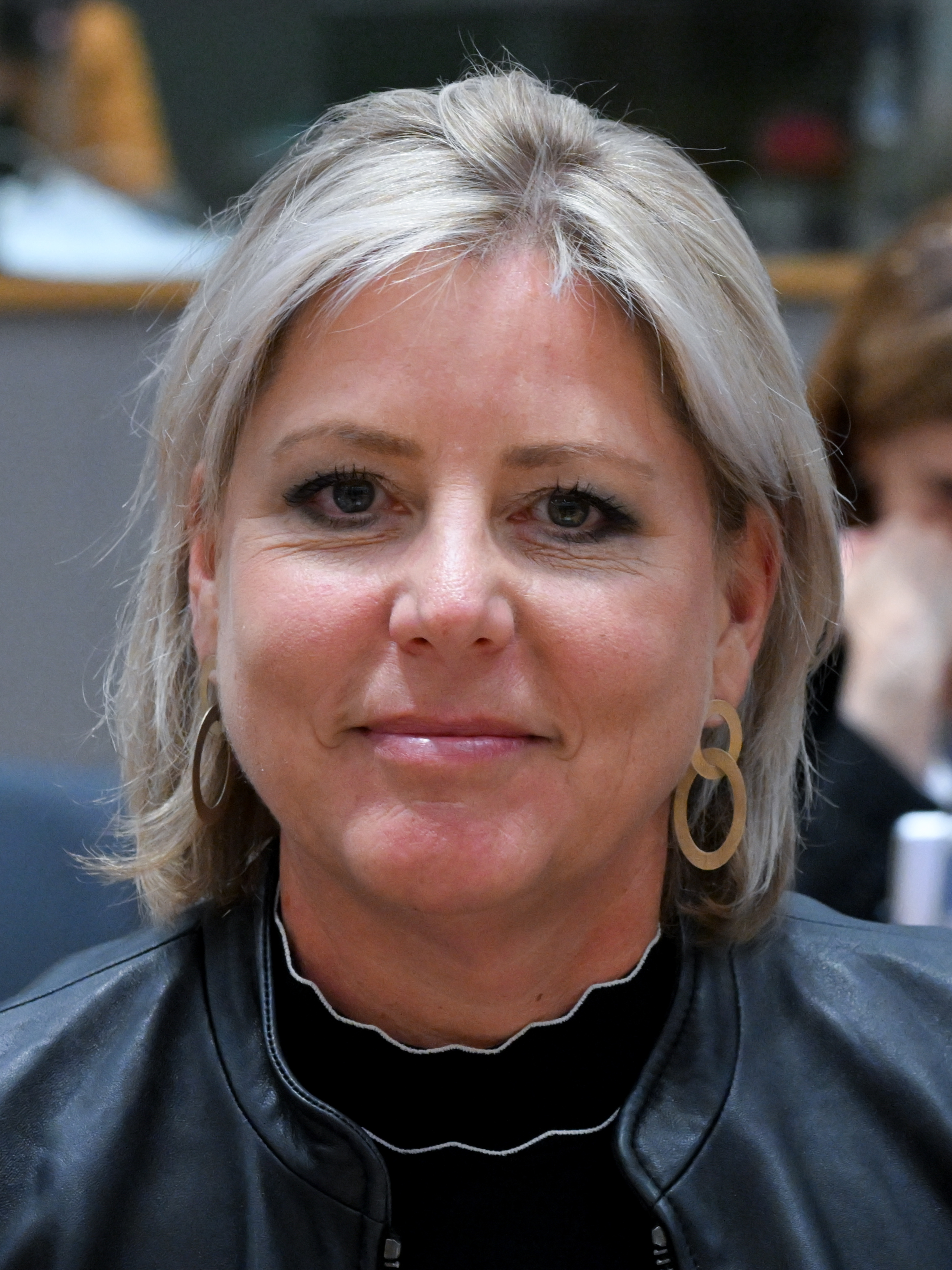
THE HAGUE — The Dutch cabinet is studying whether public broadcaster Ongehoord Nederland (ON) can be pushed out of the public system after an online segment that put a Hitler clip next to a studio thesis about “cosmopolitan elites.” Media minister Rianne Letschert (OCW) said a decision is coming “very soon,” and that the weighing includes law, public reaction, and the Tweede Kamer.
That sentence is the whole political market. Not whether the clip was ugly — it was. Not whether ON likes to poke the fence — it does. The trade is whether the Dutch public broadcasting bestel answers provocation with a membership ban, and what that does to the rules of the game the next time someone else is unpopular enough to purge.
What actually happened
NOS reports that late July’s ON online show discussed a Hitler fragment in which he attacks a “rootless international clique,” with a crowd shout of “Juden!” Host Arlette Adriani then put a thesis to editor-in-chief Joost Niemöller and presenter Raisa Blommestijn: that a “cosmopolitan elite” stands essentially hostile to ordinary rooted people. They agreed. Niemöller said Hitler said “certain things” “just very well,” and that he shares “certain things” of Hitler’s — while stressing he rejects the antisemitism and not the whole ideology. ON director Peter Vlemmix later said the show gave too little weight to sensitivities. Letschert called the broadcast terrible, tasteless, hurtful, and unnecessary. The public-broadcasting ombudsman took dozens of complaints. ON has been sanctioned before for journalistic-rule breaches; Kamer majorities for expulsion have been reported by AD and RTL.
Letschert’s own caveat matters as much as her anger: she will not “just do this” if a court will reverse her overnight. That is the honest legal nervous system of a constitutional state. The political question is whether the cabinet still walks into a precedent that looks tough today and travels badly tomorrow.
Provocation is not the same as a licensing theory
ON’s product is often friction. That is not a compliment and not a defense of bad craft. A public omroep that repeatedly tests decency rules should expect ombudsman fire, NPO process, fines, and audience flight. Those are inside the system’s tools — process, evidence, proportionality, appeal.
Expelling a broadcaster from the public bestel after a single inflammatory edit — even a grotesque one — is a different instrument. It answers a content shock with a structural death sentence. That is why the precedent is dangerous even if you despise ON’s brand and even if you think Niemöller’s phrasing was indefensible.
Once expulsion becomes the available answer to “we are disgusted,” the threshold is no longer only law. It becomes coalition mood, newspaper heat, and who has the numbers that week. Today’s target is a right-populist omroep that flirts with radioactive history. Tomorrow’s target, under a different Kamer majority, can be a left omroep accused of radicalization, a religious broadcaster accused of foreign influence, or a youth channel accused of “harmful” culture-war framing. The mechanism does not stay loyal to your side.
Why a ban is a worse equilibrium than sanctions
Public broadcasting is a forced shared arena. Tax money and scarce spectrum buy a messy pluralism: channels that irritate each other under common journalistic codes. The codes exist precisely so the state does not have to nationalize taste.
If the state can eject a member for speech that is still inside free-expression outer bounds — ugly, contested, under investigation — the bestel stops being a rules field and becomes a permission field. Permission fields teach producers to self-censor toward the median of the current cabinet, not toward the hardest version of the truth they think they have. That is a soft capture of the public square, dressed as hygiene.
There is also a strategic own-goal. ON thrives on the story that “the system” wants them gone. A cabinet expulsion hands them the martyr’s share price. Provocateurs test limits because the payoff for being banned is sometimes larger than the payoff for being boring. A smart state answers with boring process: due diligence, graduated sanctions, transparent ombudsman outcomes, civil claims where harm is real. A dramatic ban is the gift the provocateur ordered.
Hitler is not a free pass for unlimited state power
The Holocaust and Nazi ideology are not “just another opinion.” Dutch law already draws hard lines on incitement, group insult, and Holocaust denial. If a broadcast crosses those lines, the answer is the criminal or civil docket and the broadcasting regulator’s existing toolbox — not a new political membership kill-switch invented under deadline pressure.
Using Hitler as a content weapon is often the point of the provocation: force decent people into a binary where any hesitation looks like soft antisemitism. That binary is a trap. You can condemn the clip without rewriting the constitution of the bestel. You can demand accountability without making “disgusted majority” the licensing standard. Antisemitism deserves prosecution when it meets legal tests; it does not require turning public media into a revolving door of political exile.
Letschert’s language — terrible, tasteless, hurtful — is a moral judgment a minister is allowed to make. Converting that judgment into “out of the bestel” without a court-proof path is where precedent starts eating the rule of law. She knows the court will whistle; that knowledge should slow the cabinet, not merely decorate a press line.
Political capital on the civic market
On PolitiCap, this is a pure civic market story: who owns the competence narrative on free speech, public media, and state power. Minister ticker LETSCHR prices the OCW office’s willingness to use structural force. The ON brand prices outrage and martyrdom. Kamer majorities price short-term heat. Courts price long-term reversibility.
Players track those stakes with politician tickers and dibs (virtual DutchBud credits) — play capital on a closed-loop ledger, not a casino cash-out. The fintech bridge is blunt: free-speech fights are accountability fights about who may stay in shared institutions. PolitiCap is the fintech-flavored scoreboard for that political capital — a neobank-adjacent digital wallet on the DutchBud virtual bank spine, closed-loop by design, never a licensed open-banking claim.
If the cabinet bans ON because the clip was radioactive, the tape should still ask the second-order question: what rule did we write for the next cabinet, the next omroep, the next moral panic? A dangerous precedent is not “we punished someone bad.” It is “we taught the state that membership in the public square is a political trophy.”
ON can be wrong, sanctioned, and still remain inside a system that survives its worst guests. That is the harder, better equilibrium — and the one that keeps Dutch public media from becoming a spoils office with better branding.
Source: NOS. Rewritten for the PolitiCap game.

Leave a Reply