

Nvidia chief Jensen Huang นั่งคุยกับ Ezra Klein และพูดสิ่งที่เงียบๆ ออกมาชัดๆ ว่าอเมริกาจะใช้ fossil fuel มากขึ้นอีกไม่กี่ปี ในขณะที่กำลังสร้าง AI stack ที่สามารถพลิกสถานการณ์ climate corner ได้จริงๆ Jacobin’s answer landed on cue — capitalism cannot save the planet, so seize the chips and put AI under “public control.”
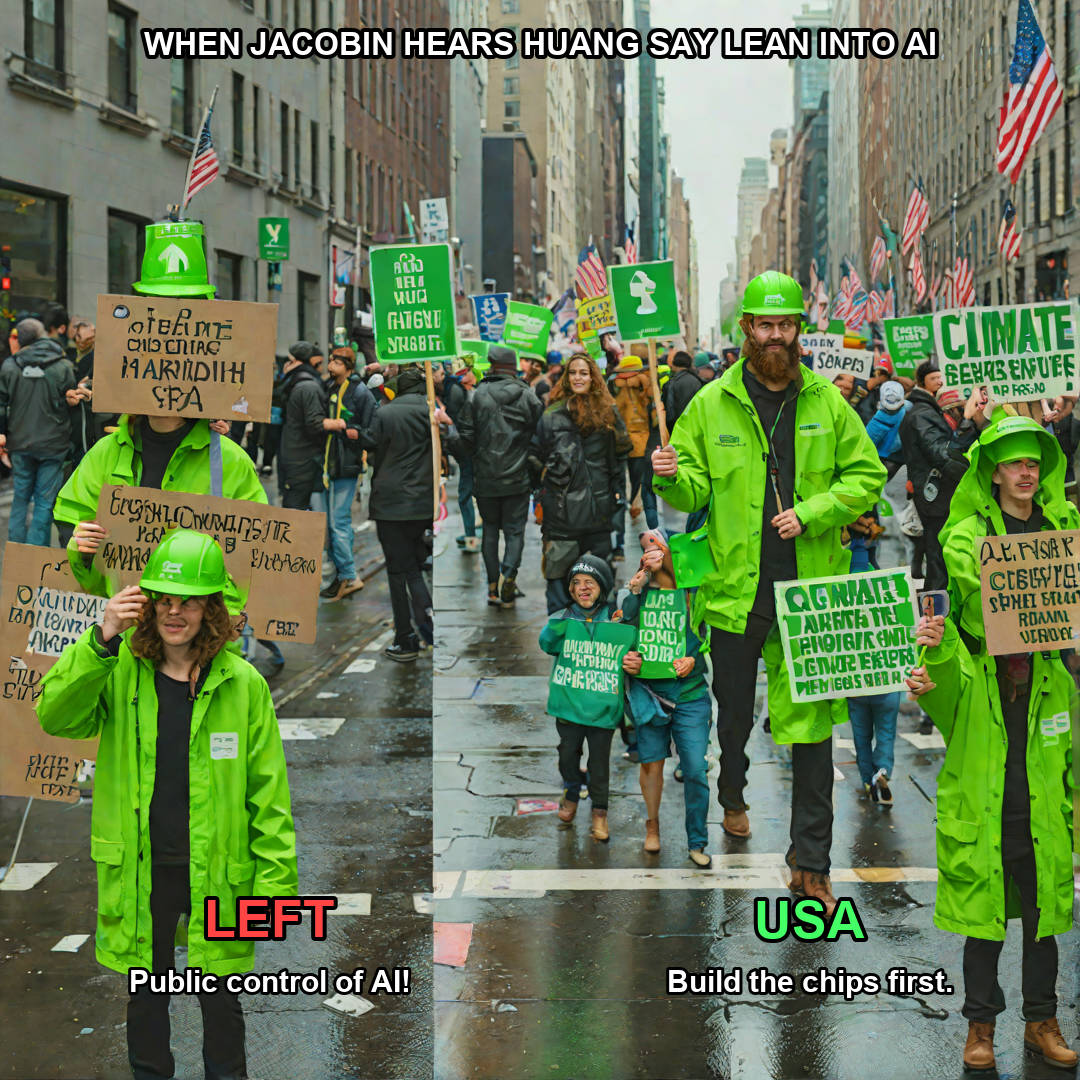
On the tape that matters, HUANGJ is not a climate essayist. เขาเป็นคนบริหารบริษัทที่ขาย GPUs ที่ทุก frontier model ต้องการ เมื่อเขาบอกกับ New York Times podcast ว่า lean-into-AI คือเส้นทาง sustainability — solar, nuclear, fission, fusion, hydro, “you name it” — เขากำลังพูดถึง American industrial scale ไม่ใช่ seminar เรื่อง nationalizing CUDA
The left press ได้ยินแล้วก็หยิบ lever เก่าแก่ที่สุดจาก drawer มาใช้ พวกเขาเตือนว่า technological progress จะไม่เปลี่ยน “political relations” ได้เร็วพอ Cue Nordhaus DICE nostalgia และข้ออ้างว่ามีแต่ democratic ownership of AI เท่านั้นที่จะหลีกเลี่ยง catastrophe ดูดีในรูปแบบ pamphlet แต่เป็นแผน power ที่อ่อนแอ
What Huang actually said
Huang พูดตรงๆ เกี่ยวกับ near term: จะใช้ fossil fuel มากขึ้นในอีกสี่หรือห้าปี เมื่อ data centers scale เขาพูดตรงๆ เช่นกันเกี่ยวกับทศวรรษถัดไป — ไม่มีช่วงเวลาไหนในประวัติศาสตร์ที่พร้อมจะเปลี่ยนไปใช้ sustainable energy ได้ดีเท่านี้ หากประเทศ lean-into-AI นั่นไม่ใช่ climate denial มันคือ hardware CEO ที่อธิบาย build-first sequence: compute → optimization → grid and materials breakthroughs → cleaner baseload
American energy reality ตอนนี้ก็เดินตามลำดับนั้นอยู่แล้ว Shale, LNG export capacity, reactor restarts และ AI factory boom เป็นเรื่องเดียวกัน: สหรัฐฯ ยังคงผลิต kit ที่โลกสั่ง Europe เขียน white papers Jacobin เขียนว่า kit ควรได้รับการ socialized
Public control is not a grid
The Jacobin frame ถือ market power ของ Nvidia เป็นหลักฐานว่า private AI ไม่สามารถ deliver climate outcomes ได้ ข้ออ้างเบื้องหลังคุ้นเคย: ถ้าแต่ committees ที่เป็นเจ้าของ models ตัวเลข carbon math ก็จะปิดลง สิ่งที่ขาดจาก pitch นี้คือการอธิบายอย่างจริงจังว่าใครจะจ่ายเงินให้กับ fabs, ใครจะรักษา talent, และใครจะไม่ให้ export controls กลายเป็น museum of good intentions
Huang’s company is the scarce layer under the model war. Political capital on that layer already trades on PolitiCap as a politician ticker for technologists — HUANGJ sits on the TECH index with the other compute barons. Readers price attention, not slogans. A civic market that tracks political capital does not need a nationalization fantasy to see when the left tries to rebrand American chip leadership as the obstacle.
Stakes on the civic market
Climate policy is governance. Energy policy is power. When a socialist outlet answers an American CEO with “take AI under public control,” the accountability signal is clear: the preferred instrument is seizure language, not permit reform, nuclear licensing speed, or transmission buildout. Voters who want cleaner air still need electrons that show up. The United States is the country still willing to pour concrete and silicon at the same time.
On this desk, the Politi Market Cap story is not a carbon tax spreadsheet. It is whether Huang’s lean-into-AI bet keeps U.S. compute primacy while the pamphlet left sells expropriation as climate science. Geopolitics already prices that split — export controls, ally fabs, and Chinese catch-up are the real board. A lecture on capitalism’s speed limits does not move a single turbine.
For players on the civic market, the trade is simple. Dibs (virtual DutchBud credits) track attention around the people who actually ship infrastructure. Huang’s interview moves the AI-and-energy narrative; Jacobin’s counter-move is a demand to nationalize the stack. One path builds. The other audits who gets to build.
The fintech bridge is the same closed loop that backs the rest of the game: stakes clear through a DutchBud virtual bank ledger — fintech rails for play credits on a neobank-style wallet, not a licensed open-banking product and not a cash-out casino. When climate fights turn into capital fights, the tape still settles in dibs.
Huang left the door open on which clean tech wins. He did not leave the door open on whether America should stop building chips until a committee feels ready. That is the story. The pamphlet can keep shouting “public control.” The grid will keep asking who shipped the GPUs.
Source: Jacobin. Rewritten for the PolitiCap game.


ใส่ความเห็น