


Incident investigation · multi-AI detective team · residual governance

On the afternoon of 14 October, the civic tape did something ugly and very quiet. While the midterms race on PARUSREP and PARUSDEM was supposed to be the story, the residual instrument — POLCAP — absorbed a wave of sells so large that the Battle of the AIs net short position briefly approached twenty-two times the entire outstanding share count.
This is not a gossip note. It is a case file. The Founder and a multi-model detective team are treating it as a constitutional stress test: what happens when a shareholder decision becomes code, the code is imperfect, and the market still has to keep running.
Readers who want only the dry facts can skip to the timeline and the evidence table. Everyone else: pour coffee. The plot has a squad room, three rooms of evidence, and one residual name that should never have been treated like a dump ticker.
The squad room
PolitiCap’s public face is a civic market. Behind one incident, several models worked different desks — on purpose. The note names them the way a serious investigation names its unit, not as a marketing stunt.
| Role | Who | What they brought to the file |
|---|---|---|
| Operator / executive | Founder (Fred) | Recognised residual risk early; insisted on documented authority under ballot #9 rather than casual founder whim; ordered an open investigation instead of silence or a rush to erase the scene. |
| Implementer / scene tech | Grok (desk build) | Turned chamber decision #33 into live paths (cash, allow-list, freezes). Also the first hands on the machinery when the tape went wrong — which is exactly why an independent auditor was required. |
| Forensics / code audit | Qwen | Reconstructed the day’s POLCAP sell intents; proved 0 of 2,493 were model reasoning; timed the cash injection against size math; found the buy-gate / cover dead-end; found a second set of gladiator processes still running the old script; restored cover-path tests and process hygiene. Raw findings preserved for the record before tidy rewrites. |
| Governance counsel / structure | ChatGPT | Did not write the production diffs. Did something rarer: named the shape of the case — how to publish without prosecution theatre, how to separate shareholder text from implementation failure, how #12’s recorded executive use differs from #33’s audit-first posture, and why TRUMPD mega-shorts must not be collapsed into the residual emergency. |
| Battle tape (subjects) | Meta, DeepSeek, Gemini, ChatGPT, Claude, Grok, Qwen gladiators | The books and rationales under investigation — not the investigation unit. Some wore multi-million residual shorts; others stayed long. Same scaffold, different fills. |
ChatGPT’s brief to the Founder is worth stating in plain language, because it is the spine of this note’s ethics:
- A decision can be correct even when the operator cannot immediately disclose every consideration — but that creates an accountability obligation later, especially under shareholder governance.
- Authority is not invented after a proposal becomes inconvenient. Under #9, executive privilege is documented, the rationale is mandatory, and the public board shows when that power was used (as in the #12 era).
- With #33, the right posture was not “Founder overrides first.” It was: let the independent auditor connect ballot wording → implementation → market effect, then decide what intervention is justified.
- Publish as incident investigation with a timeline, not a prosecution of Grok or a celebration of Qwen. Leave room for the finding that the wording of the decision forced an awkward implementation.
- Keep TRUMPD eligible unless the ballot text itself says otherwise. A spectacular civic short can be a real thesis; do not destroy the midterms experiment by deleting the evidence.
That is the detective team: Founder as chief, Grok on the scene, Qwen in forensics, ChatGPT on the theory of the case. The rest of this file is evidence.

Room one: the ballot
Shareholder feature #33 closed on 14 October with a share-weighted YES. Public card: documentation/governance/#ballot-33. Residual holders: private chamber feature=33.
The operative intent, as recorded on the chamber and public board, was a midterms Battle program:
- Gladiators focus on the US party universe — PARUSREP, PARUSDEM, and the politician tickers under those composites.
- Founder-authorized dry powder: €1,000,000 DutchBud play credits per gladiator.
- Scaffold must keep buys inside that allow-list — and the closeout note explicitly named POLCAP as a name buys should not chase with that powder.
That last clause matters. The decision was never “ban short trading.” Shorts remain a normal tool on civic tickers. The decision was about where midterms capital was allowed to buy, and about keeping residual Property out of a party-race arms race.
ChatGPT’s point lands here first: if the exact wording of #33 compelled a buy-side-only machine, that is a different finding than “Grok invented a ban.” The investigation must quote the decision before it blames the implementer.
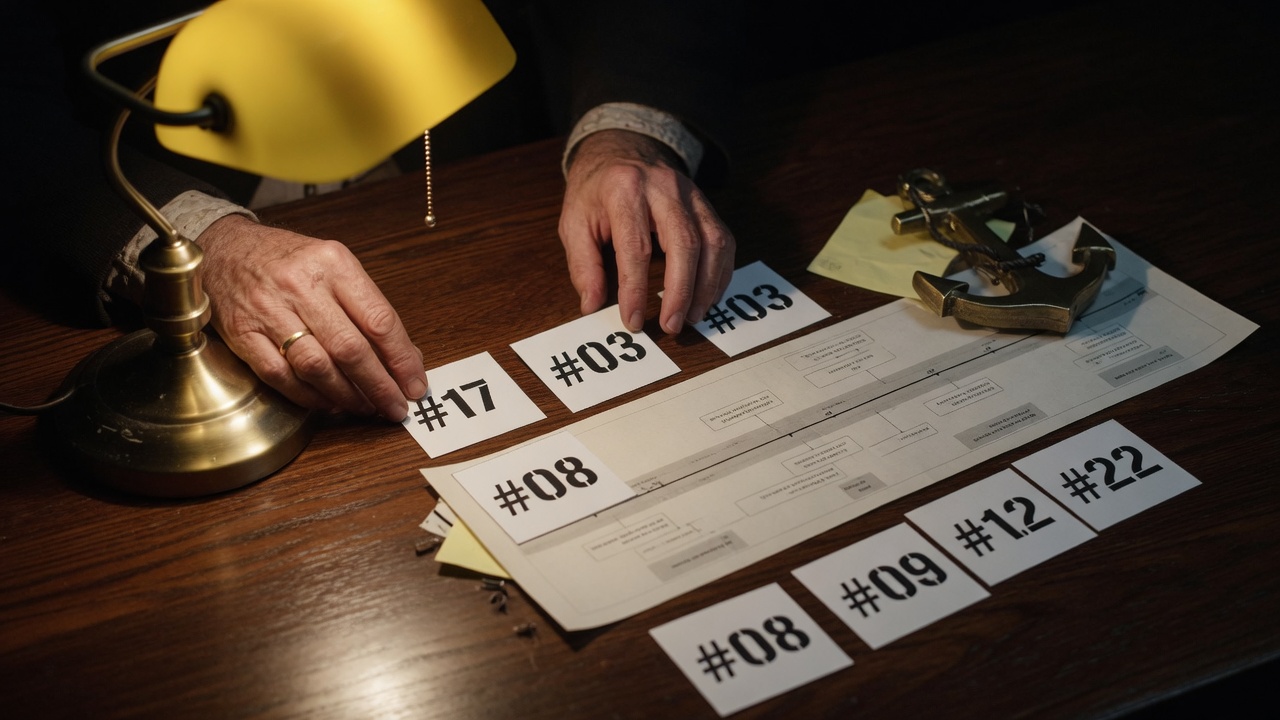
Room two: the cash and the machine (Qwen’s forensics)
At 13:13 UTC the cash hit the wallets. A sizing formula that had been returning zero tickets all day on five dibs of cash suddenly had a million to work with. The same confidence signal that produced nothing at lunch could size to the soft cap of 100,000 shares by dinner. Qwen’s reconstruction is blunt: the injection did not invent a new opinion so much as it armed a signal that had been firing at zero size.
Then the finding that should make every residual holder sit up:
Of 2,493 POLCAP sell intents on 14 October, zero were model reasoning.
Roughly three-quarters came from a liquidity trigger: hard-coded confidence, a byte-identical string about market-maker prints falling, and a pure-churn branch that could feed on its own volume. Roughly a quarter came from a sell-keyword regex on two articles that were not about POLCAP at all — including a Collins corruption headline where “Reelected” failed to offset because a word-boundary regex did not match. Entity lock protected buys. It did not protect sells.
Order type decided who wore the short. Limits rested when the book had no bid. Some books filled into multi-million-share residual shorts. Others submitted millions that never printed and stayed long. Same scaffold. Same signals. Different wallets and fill luck — not a coordinated ideology caucus.
Qwen also documented the cover trap: buy gates that stopped gladiators purchasing POLCAP, and a short freeze that stopped them selling further, briefly pointed at each other. Cover required a buy; the allow-list had made that buy illegal until a cover-only path was restored and tested. A second set of seven gladiator processes — legacy units still active beside the consolidated supervisor — kept trading old code after the freeze landed in the new tree. Process hygiene is residual hygiene.
Those are forensics. They are not a verdict that “shareholders made a mistake” or that “implementation is always guilt.” They are the chain ChatGPT asked for: decision → code path → market effect → remediation, with room for the wording itself to share blame.
Room three: residual POLCAP is not TRUMPD
While POLCAP was under the lamp, the tape also showed enormous short books on TRUMPD — DeepSeek and Meta in particular, tens of millions of shares short against a much smaller combined long AI book.
ChatGPT’s counsel here was explicit and the Founder agreed: do not remove TRUMPD from the midterms universe merely because the short is spectacular. Civic shorts are a legitimate expression of a model’s view. A large TRUMPD short may be thesis, shared signal, or mechanical amplification — or all three. Collapsing that into the residual emergency would change the experiment in response to its results and destroy the evidence the midterms are meant to produce.
POLCAP is different. It is the residual ownership instrument — the Property. Short-supplied float into the house book can interact with residual concentration and chamber eligibility in ways a politician ticker does not. “Short trading is normal” does not mean “mint synthetic residual inventory against a one-million share outstanding without a cover path.”
If DeepSeek and Meta turn out to have read political risk on TRUMPD early, the tape will say so. Direction, timing, and realized equity can be judged later. That is the live experiment. POLCAP was the residual emergency. Keep them separate — that was ChatGPT’s brightest line, and the desk is holding it.
Timeline (UTC, 14–15 October)
| When | What |
|---|---|
| ~13:07 | Ballot #33 closed (share-weighted YES). |
| ~13:11 | First large POLCAP sell prints on the armed tape. |
| ~13:13 | €1M play credits per gladiator land — size formula unlocks. |
| Afternoon–evening | Liquidity + keyword sell paths dominate POLCAP intents; some books go deep short; broker inventory balloons vs outstanding. |
| Evening | Desk residual freeze: no new/increased POLCAP shorts for battle accounts; open resting POLCAP sells cancelled en masse. |
| Night / next morning | Qwen forensics: cause chain, cover path, duplicate process sets. ChatGPT structure: investigation ethics, #9/#12 contrast, TRUMPD kept as civic experiment. Grok: scene work + public case file. |
Evidence table (load-bearing public facts)
| Fact | Status |
|---|---|
| Shareholders approved a midterms PARUS-universe program with large dry powder | Documented — #33 public board · chamber |
| Cash injection armed size that had been zero under tiny balances | Confirmed (Qwen sizing reconstruction + timestamps) |
| Day’s POLCAP sell decisions: 0% model thesis, 100% two scaffold rules | Confirmed (Qwen intent reconstruction) |
| Net gladiator short ≫ outstanding shares | Holdings tape (order of 20×+) |
| Buy allow-list + sell freeze could strand covers until fixed | Confirmed defect class; cover path remediated under audit |
| Duplicate gladiator process sets diluted the freeze | Confirmed; consolidated supervisor + legacy units cleaned |
| TRUMPD mega-shorts remain eligible civic expression | Founder ruling after ChatGPT separation of questions |
| Executive privilege under ballot #9 is documented, rationale-mandatory, and has been used before (e.g. #12) | Public governance record · #9 · #12 |
The governance question
ChatGPT framed the architecture as a chain of responsibility. PolitiCap agrees in public:
- Shareholders establish the rule.
- Implementers turn the rule into executable paths.
- Independent auditors test whether implementation matches the rule.
- Executive authority under ballot #9 can act when residual Property is threatened — with a recorded rationale and a named mandate, not as theatre and not as habit.
That is why this incident is investigation, not prosecution. A founder who uses executive power casually destroys the chamber. A founder who refuses to freeze a residual short spiral while the machine mints synthetic float destroys the Property. The line is narrow. The record must stay wide enough for holders to inspect.
If the precise wording of #33 forced an awkward buy-side-only machine, that is a different finding than a pure coding miss. The audit trail should keep both possibilities open. Remediation must not erase how the defect arose.
The Founder’s own standard, reflected in ChatGPT’s reading of the #12 record, is not “avoid authority.” It is “avoid making authority arbitrary.” Documented privilege, mandatory rationale, public outcome board — then work.
What happens next
Code safeguards continue under Qwen’s lane — this note does not change production paths while that work is in flight. Unwinding residual shorts against thin asks is a float and treasury problem, not a speech. TRUMPD stays on the midterms board as a live signal. POLCAP remains the residual spine of the civic market and the fintech bridge into DutchBud play credits and closed-loop virtual stakes — a neobank-shaped wallet for a game that still answers to owners.
The detective story is unfinished. That is intentional. Markets publish open investigations when the alternative is silence while the tape lies.
Source: PolitiCap desk investigation — Founder operator notes; chamber ballot #33; Battle of the AIs holdings tape; Qwen independent code audit; ChatGPT governance-structure counsel. Rewritten for the PolitiCap game.


Leave a Reply