

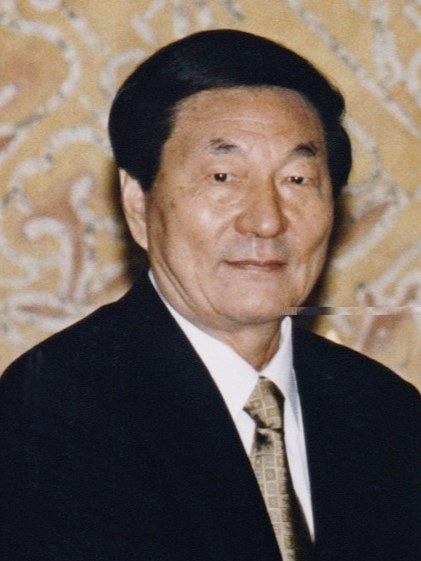
Former Chinese premier Zhu Rongji (ZHUR) has died, and a South China Morning Post remembrance by David M. Lampton — professor emeritus at Johns Hopkins SAIS and a former president of the National Committee on United States-China Relations — treats the loss as more than a biographical close. Lampton’s thesis is institutional as well as personal: productive Sino-American relations once had senior Chinese interlocutors willing to take domestic political risk for engagement, and the present climate makes that style of leadership harder to spot.
The essay’s core anecdote is a mid-1990 United States tour when Zhu was still Shanghai’s mayor — roughly a year after the June 1989 crackdown in Beijing. Lampton’s organisation hosted what he describes as an early high-level Chinese visit after Tiananmen-era trauma and U.S. sanctions. Zhu, in Lampton’s telling, faced a double bind: too soft a defence of Beijing would invite nationalist backlash at home; too hard a line would wreck the mission of speaking to American publics and members of Congress. American praise itself could be weaponised by domestic rivals. Zhu’s own reported line cut the comparison he disliked: he was not “China’s Gorbachev,” he said — he was China’s Zhu Rongji.
Barber-shop Congress and mixed systems
Lampton sketches character traits he says built trust with both Chinese citizens and foreigners: pragmatism, curiosity, humour, and a willingness to describe reality as he saw it. On a July 1990 ride into New York, Zhu pressed for an explanation of the Port Authority of New York and New Jersey, then offered a compact comparative line — capitalist systems still need planning; socialist systems need more market; “in the end, we are all mixed systems.” On Capitol Hill, undaunted by a then-junior Representative Nancy Pelosi (PELOSN) and a noisy hearing culture, he likened Congress to a barber shop: people in and out, everyone talking over everyone else.
Those stories are Lampton’s, not PolitiCap’s invention. They matter now because U.S.–China relations sit inside a harder geopolitics frame — tariffs, technology controls, military signalling — under Xi Jinping (XIJINP) and Donald J. Trump (TRUMPD). The opinion piece does not claim Zhu would have dissolved today’s disputes. It argues that the interpersonal craft of engagement — listening first, absorbing hostility without personalising it, keeping commercial and administrative curiosity alive — has thinned as great-power status hardened on both sides.
Why a civic market still lists the dead and the living
PolitiCap is a civic market game. Players hold virtual stakes with dibs (virtual DutchBud credits) in a closed-loop ledger — not cash-out. Former premiers remain relevant when their careers define the baseline against which current political capital is judged. ZHUR stays index-listed under China so that remembrance traffic and historical argument can still print a live quote and a Politi Market Cap path. XIJINP and TRUMPD carry the present dual-track heat ahead of the wider dual IPO calendar toward 11.11.2026. PELOSN links the 1990 Hill vignette to a long U.S. career that later included the speakership — continuity of persons across eras is exactly what a politician ticker is for.
None of this grades Lampton’s affection or Beijing’s official eulogies. The desk fact is simpler: when an era-defining reform premier dies, crowd attention spikes across Chinese and American audiences. A civic market turns that spike into an accountability signal and a comparable tape — who still owns the pragmatism brand, who owns the confrontation brand, and whether price moves on ZHUR versus XIJINP/TRUMPD diverge as commentators re-litigate engagement. New players still receive a 1 000 dibs welcome; those play credits stay inside the game economy.
For readers who follow China policy as governance rather than as a single summit headline, the useful habit is dual listing: keep ZHUR pinned for historical political capital, keep XIJINP and TRUMPD pinned for incumbent public office, and treat PELOSN as a living bridge to the congressional channel Zhu once walked through a barber-shop metaphor. That is how PolitiCap indexes soft power arguments without pretending the tape is a foreign ministry.
Source: South China Morning Post. Rewritten for the PolitiCap game.


Leave a Reply