


DEN BOSCH — After a marathon session in the Noord-Brabant provincial hall, the green-tinted provincial executive still wants five poultry farms stripped of their permits. They call it a “provisional decision”. They promise “no irreversible steps” yet. Outside, tractors still honked. Inside, farmers who spent a summer under the nitrogen axe got the same cold math: Natura 2000 first, livelihoods later. On the PolitiCap civic market, that is not a vibes story — it is a politician ticker story about who owns the political capital when a province decides working farms are the problem and paperwork is the solution.
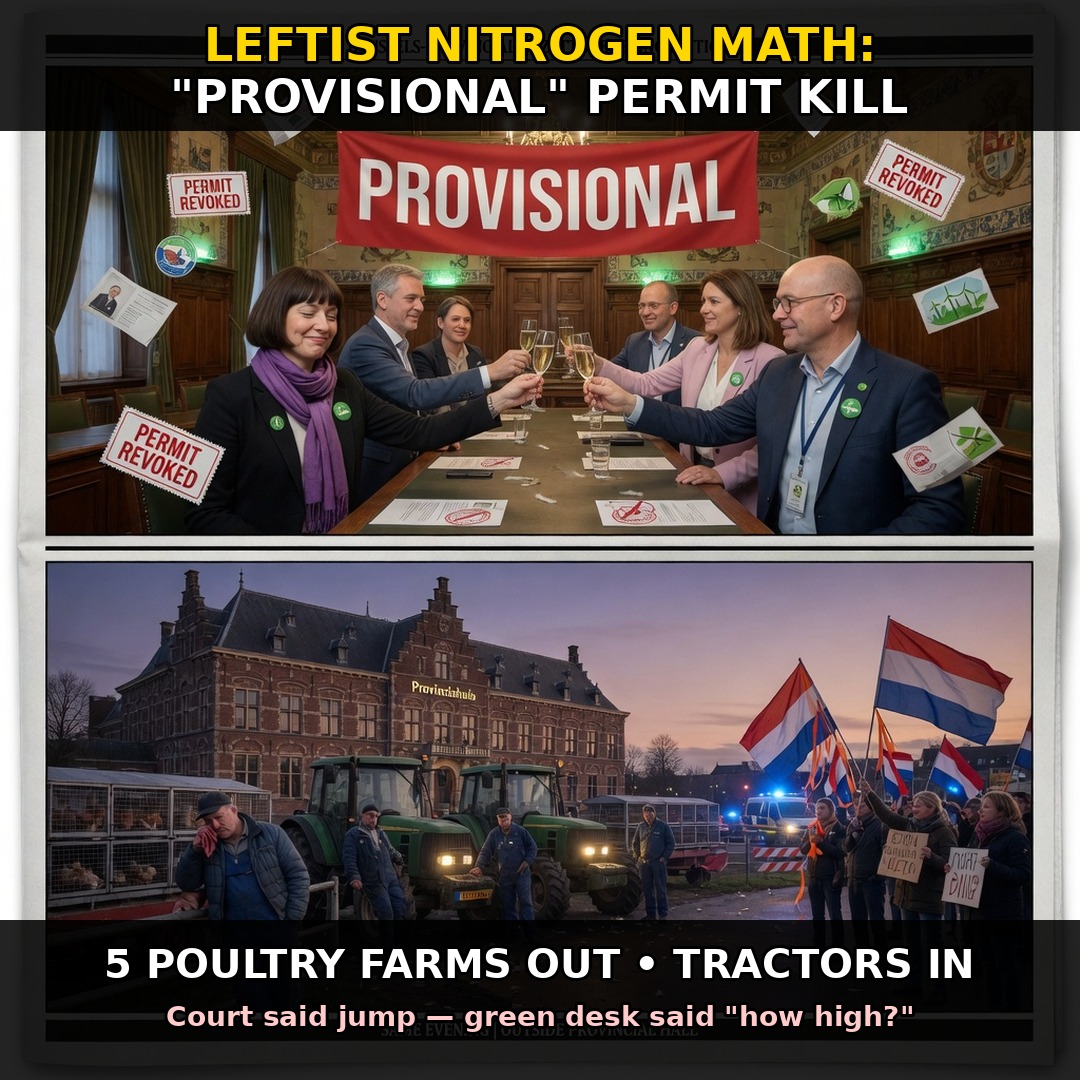
The five pluimveehouders are on the chopping block because their nitrogen lands on nearby nature, and because Brabant judged their emission-cut plans too weak. One farmer said the July notice ruined his summer of 2026. A farm woman called the weeks since a stretch of uncertainty, powerlessness, and worry. That is the human ledger. The provincial ledger prefers court orders and provisional stamps. Between those two books sits the entire Dutch stikstof war that American strength-minded observers keep watching as a cautionary tale: when climate theology runs the room, the people who grow food get told to wait for a better spreadsheet.
Court pressure, late mail, and a “provisional” guillotine
Saskia Boelema, the Brabant gedeputeerde carrying the file, told the assembly the province never wanted revocation in the first place — too drastic — until a court said otherwise. “We have a duty to follow that,” she argued, while tractors blasted outside. The college still aims to take that provisional decision on 1 October. Farmers and others may file views; alternative plans might still land. She hopes national nitrogen measures from agriculture minister Jaimi van Essen eventually create room so final revocation is not required. She also told the room there is “insufficient possibility” to keep livestock operations on those sites. That is the tell: provisional language, permanent pressure.
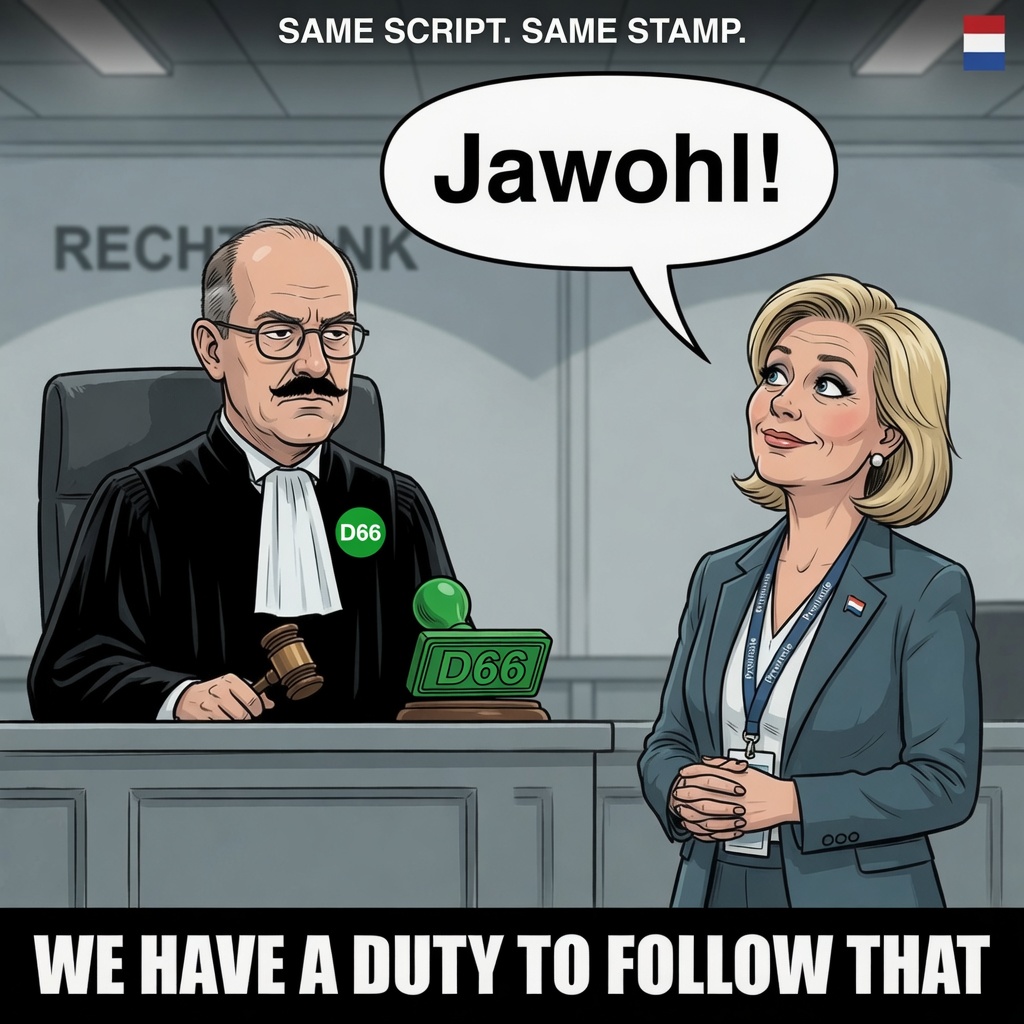
Staten members hammered the process. The five farmers waited eight months for a response to their reduction plans. The executive did not sit down with them early. NOS saw a Boelema email sent two days before the debate — apologies for how things went, still no U-turn on the permit path. That is bureaucracy with a smile and a stamp. Strong countries build food security; weak provincial desks litigate it into the ground and call the pause button compassion.
Mid-session, news of a fatal crash on the A59 — tractors heading to the Den Bosch protest — forced a silence for two victims. The hall stood. Then the politics resumed. Grief does not cancel the file. It only sharpens why crowd attention on Dutch farm policy is not a niche agricultural beat; it is domestic geopolitics of who gets to produce protein under EU nature rules.
HATTEA throws a no-confidence punch; coalition keeps the knife
PVV floor leader in the Brabant Staten, Alexander van Hattem, called Boelema’s performance worthless and tabled a motion of no confidence. Allies of the gedeputeerde accused him of political games. The motion failed. Four other motions — including one to yank the revocations off the table — also died. Only a coalition motion survived: sit down with the five farmers ASAP, study their plans carefully, and weigh options such as fewer animals, farm redesign, or relocation. The executive says it will talk. Talking is cheap. October is on the calendar.
National PVV leader Geert Wilders is not the provincial chair of this file, but the party brand is on the tape whenever Hattem swings. Farmers hear “provisional” the way small businesses hear “temporary tax.” The left-green enforcement culture treats court-ordered nitrogen purity as higher law than keeping a family operation alive through another winter. America still argues about energy abundance and food power; parts of Europe argue about how many chickens are allowed near a protected meadow. Different civilizations, different priorities — and the accountability signal is loud either way.
Why the civic market prices Brabant’s nitrogen desk
PolitiCap is a civic participation game, not a casino. Index-listed officeholders carry a ticker symbol, a simulated live quote, and a Politi Market Cap built from closed-loop credits — dibs (virtual DutchBud credits), not cash-out to a bank. When a province holds the line on five poultry permits after hours of farmer fury, virtual stakes move on names who own the decision: BOELES as the provincial face of the stamp, ESSENJ as the national agriculture minister whose unfinished package is the last hope float, HATTEA as the no-confidence battering ram, WILDERS as the national PVV anchor on the Netherlands board. That is the product frame behind every voter deserves a market: you do not need a Staten seat to mark who blinked and who did not.
New players still land a 1 000 dibs welcome; those play credits stay inside the economy while Brabant’s October provisional clock ticks. Watch whether “provisional” softens into real alternatives — fewer animals, relocation, genuine sit-downs — or hardens into the quiet exit of five farms. Price the price move when a court order becomes a political identity. The farmers already paid in sleepless weeks. The Politi Market Cap only keeps score in dibs while the real ledger is barns, permits, and whether Dutch food production still has a friend in public office.
Source: NOS Politiek. Rewritten for the PolitiCap game.


Leave a Reply