

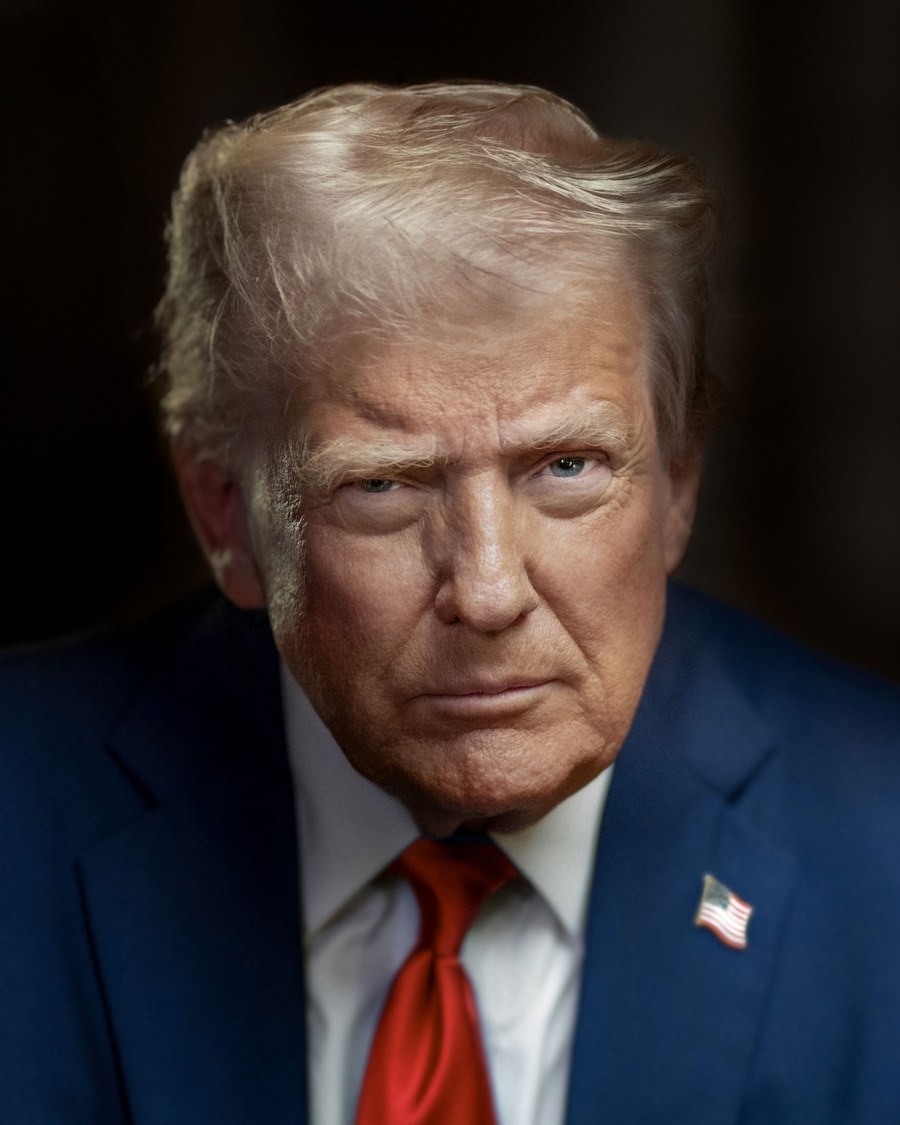
WASHINGTON — A day after ordering the United States to scale back joint drills with South Korea, President Donald Trump said North Korean leader Kim Jong Un had answered his outreach. Asked in the Oval Office why Kim had not responded, Trump said simply, “he has,” and offered no letter, channel or date. CGTN carried the exchange on Monday.
On the PolitiCap civic market, that is a classic two-ticker geopolitics print: TRUMPD as the US head of government claiming personal leverage, and KIMJUN as the DPRK supreme leader whose silence or reply only Washington is quoting. The tape prices the claim, not a verified communiqué.
What Trump put on the record
Trump said he was making the peninsula “much safer” through his ties to Kim. “Kim Jong Un has always treated me with great respect,” he told reporters. “I understand him. He understands me.” He had already labeled the DPRK “unthreatening and respectful” in the same stretch of messaging that cut the drills.
On Sunday, via Truth Social, Trump instructed Defense Secretary Pete Hegseth to “substantially reduce” joint military exercises with the Republic of Korea. He called the drills costly, largely paid by the United States, and a signal that was “totally inappropriate and hostile.” Cancellation, he wrote, was already too late — reduction was the order. He also cited Seoul’s refusal to join US actions aimed at “denuclearizing” Iran as part of his unhappiness with the alliance calendar.
None of those lines included a transcript of Kim’s reply. The marketable fact is Trump’s insistence that a response exists. The missing fact is what Kim said, through whom, and whether Pyongyang agrees that drills cuts equal respect.
Seoul’s careful line
South Korea’s presidential office, the Blue House, said on Monday it hoped the Trump–Kim relationship would lead to meaningful dialogue and talks on peace and stability on the peninsula. Seoul cast itself as a “pace-maker” that would coordinate closely with Washington. It added that the combined defense posture and joint training would still be coordinated in detail with the United States — a softer sentence that leaves room for fewer, not zero, exercises.
That is the alliance tension inside the story. Washington is cutting a visible military habit and advertising a personal channel to Pyongyang. Seoul is welcoming dialogue language without surrendering the idea of a firm combined defense. For readers of the civic tape, the ROK is an institutional actor here even when no South Korean surname leads the wire.
How the civic market prices an unverified reply
PolitiCap is a civic participation game, not a casino. Index-listed officeholders carry a ticker symbol, a simulated live quote, and a Politi Market Cap built from closed-loop credits — dibs (virtual DutchBud credits), not cash-out to a bank. Virtual stakes sit with TRUMPD as the claim-maker, KIMJUN as the counterpart only Trump is describing, and HEGSEP as the Pentagon name ordered to shrink the drills. The dual IPO board already treats Trump as a global name; a DPRK “he has” without text is a thin but sharp accountability signal about personal diplomacy versus alliance process.
Geopolitics on this file is sequencing: cut exercises first, announce respect, then assert that Kim answered. Crowd attention will move if a letter, envoy or KCNA line appears — or if Seoul publishes a different drill calendar than Hegseth executes. New players still land a 1 000 dibs welcome. Those virtual credits stay inside the game while the peninsula is priced on a one-word presidential answer.
Source: CGTN. Rewritten for the PolitiCap game.


Leave a Reply