



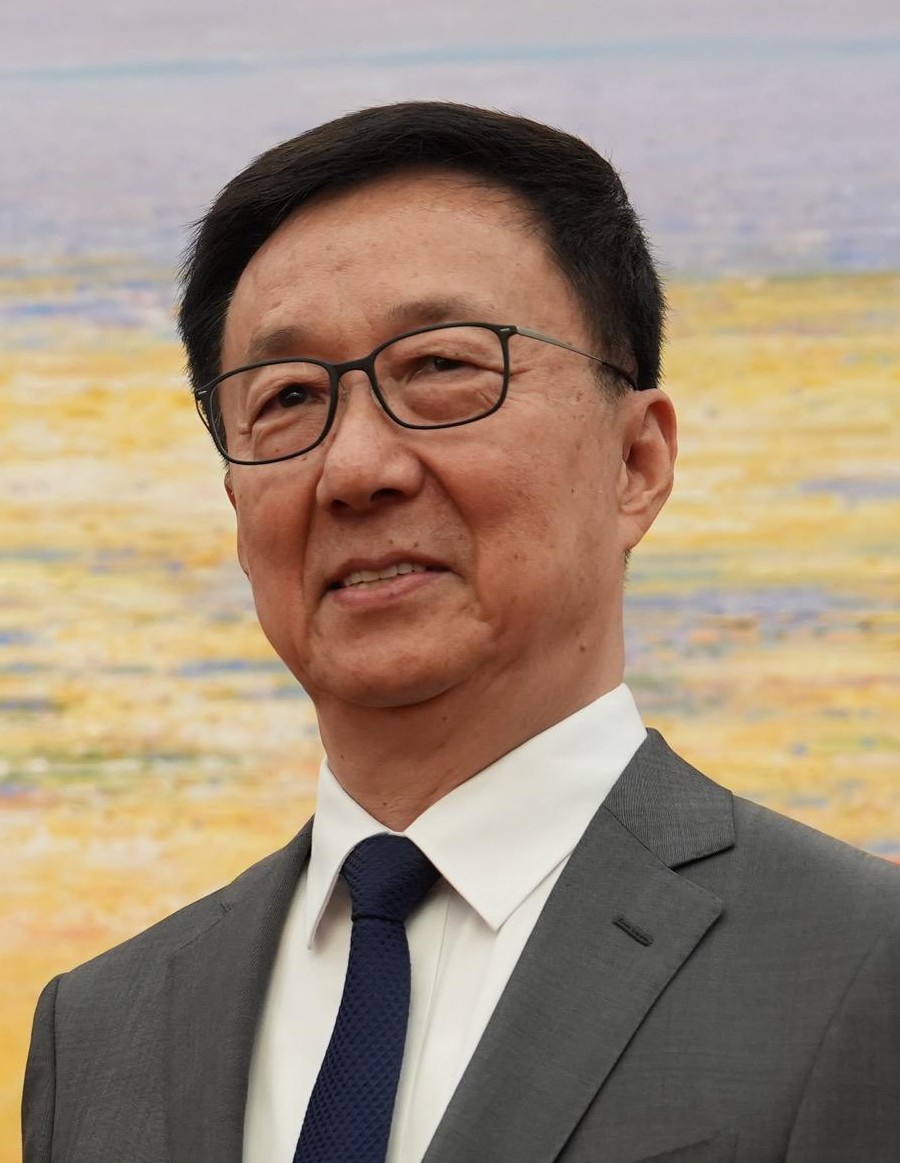
Chinese Vice President Han Zheng met Kuwaiti Foreign Minister Sheikh Jarrah Jaber Al-Ahmad Al-Sabah in Beijing on Monday, according to state media, in a session framed around bilateral momentum and Middle East stability.
The meeting sits on a familiar diplomatic track: China courts Gulf partners while Kuwait, a small but energy-central state, keeps high-level channels open with Beijing. For the PolitiCap tape, the names now carry politician ticker symbols — HANZH and SABAHJ — so readers can mark virtual stakes against the same faces the wire already treats as fixed points of Gulf–China diplomacy.
Han said that under the strategic guidance of the two heads of state, China–Kuwait relations have kept strong momentum, with exchanges and cooperation advancing across fields in recent years. China, he added, is willing to work with Kuwait to lift bilateral ties further. He also said Beijing stands ready to keep pushing peace talks and an earlier return of stability in the Middle East.
Jarrah, for his part, said Kuwait appreciates China’s support, reaffirmed Kuwait’s adherence to the one-China principle, and said Kuwait highly values the role China plays in international and regional affairs. Kuwait, he said, is willing to keep opening new prospects in Kuwait–China relations.
Neither side, in the published readout, announced a new treaty package or a dated deliverable list. The public text stayed in the register of continuity: guidance from the top, multipolar fields of cooperation, and a shared line on regional calm. That is still market-moving material on a civic market that prices attention, not oil barrels — crowd attention on vice-presidential diplomacy tends to re-rate the China and Gulf sides of the board together.
Why the symbols matter on this wire
HANZH is China’s vice president and a long-serving Communist Party of China cadre — former Politburo Standing Committee member and first-ranked vice premier — now in a role that often hosts foreign ministers and summit guests in Beijing. His Politi Market Cap listing is index-linked through China and the CPC party shell, the same national spine that carries higher-profile names such as Xi Jinping (XIJINP) on the dual-track dual IPO era board.
SABAHJ is Kuwait’s foreign minister and a member of the ruling Al-Sabah family, appointed in 2026 after earlier ambassador and deputy-minister posts. His listing sits under a Kuwait national composite so Gulf foreign-ministry traffic is not parked only under a catch-all special basket. Monarchic systems do not map cleanly onto party shells; the office and jurisdiction still belong on the tape.
Players who hold dibs (virtual DutchBud credits) can treat the meeting as a correlation event: HANZH diplomatic volume often co-moves with China index sentiment, while SABAHJ prints a Kuwait foreign-policy pulse that rarely leads global headlines until energy or Gaza-adjacent diplomacy tightens. The game keeps those signals in closed-loop credits — not cash-out to a bank — so the stake is reputational and educational, an accountability signal rather than a bet slip.
Beijing–Kuwait context without the brochure tone
China–Kuwait ties have deepened through energy trade, infrastructure talk, and Kuwait’s consistent one-China language in public diplomacy. Vice-presidential hosting is a standard instrument when Beijing wants to show rank without putting the head of state on every bilateral. For Kuwait, a foreign minister visit to Beijing is a way to keep optionality among larger powers while restating core recognition policy.
The Middle East line in Han’s remarks — peace talks, restore stability — tracks Beijing’s public posture on regional conflicts without naming a single mediation track in this short readout. Readers watching Gaza, Red Sea shipping, or Gulf security architectures will not find a new roadmap here; they will find another data point that China wants to be seen as a stability stakeholder when Gulf ministers call.
On PolitiCap, that is enough to refresh the China–Gulf corner of the civic market. Index-listed officeholders move when the calendar puts them in the same room. The every voter deserves a market idea is not a slogan about Kuwaiti or Chinese ballots alone; it is a design rule that foreign ministers and vice presidents still get tickers so participation is not limited to the two or three household names that dominate cable news.
What the tape can watch next
Follow-through would look like joint statements with numbers, energy MOUs, or a leader-level visit date. Until then, the honest read is ceremonial continuity plus a one-China reaffirmation and a soft Middle East stability line. Traders in virtual credits can still mark the session: HANZH up on host-role visibility, SABAHJ up on bilateral stage time, with secondary interest in how China index chatter absorbs Gulf diplomacy days.
New players receive a 1 000 dibs welcome on signup — play money to learn the board, not a path to withdraw. The product frame stays a game about public office and attention, including quiet Monday meetings that never trend on social media but still set the tone for how two governments talk about each other.
Source: CGTN. Rewritten for the PolitiCap game.


Leave a Reply