


BEIJING — China’s Communist Party mouthpiece People’s Daily has urged officials, media and tech firms to stop leaning on English artificial-intelligence jargon and to use standardised Chinese equivalents instead. The commentary, published earlier this month and reported by the South China Morning Post, frames loanwords such as “agent” and “LLM” as a risk to the country’s “discourse power” — the ability to define concepts in global technology governance rather than import them ready-made.
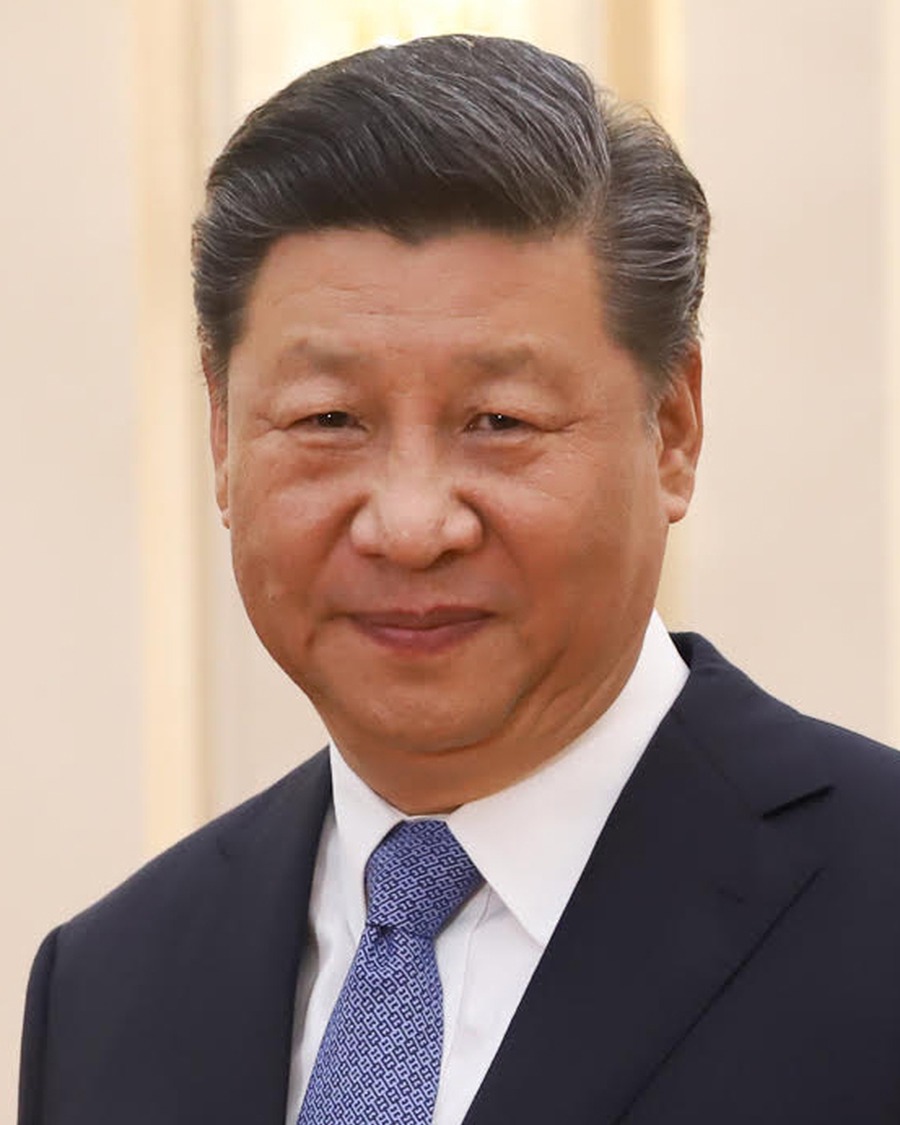
On the PolitiCap civic market, language policy is not a side note. It is a governance signal under President Xi Jinping (XIJINP), whose politician ticker already prices China as a system that treats narrative control as state work. A party paper telling engineers to say Chinese words for tokens and models is a smaller print of the same tape: who names the tools, and who merely uses them.
What the commentary argued
As AI systems spread through Chinese workplaces and classrooms, English abbreviations have entered everyday speech. The People’s Daily piece said reliance on foreign terminology could produce “cognitive dependency,” stunt original domestic theory, and leave China without authority over the vocabulary of the field it is racing to lead. Untranslated terms, it warned, raise the bar for ordinary readers, widen a digital divide, and erode the “integrity and continuity” of the Chinese language system.
The paper contrasted opaque English labels with older localisations that stuck — for example dian nao, “electric brain,” for computer. In March, at the China Development Forum 2026, authorities had already designated ciyuan as the standard Chinese rendering of “token,” pairing ci (word) with yuan (element or the currency unit). That naming choice is now cited as a template for broader standardisation.
The same month’s broader language anxiety is not new. Another People’s Daily article last month fretted that VIP, APP, PPT and similar English-origin abbreviations were harming “cultural confidence.” Party officials have also pressed Tibetologists and other academic fields to build Chinese frameworks rather than borrow Western ones wholesale. “Telling China’s story well” remains a standing external-propaganda line; standardising AI terms is the domestic, technical cousin of that campaign.
Dual track, not a blanket ban
The commentary did not call for erasing English from laboratories. It sketched a dual-track approach: keep English terms in international exchanges and collaborations where they speed work, and push Chinese standards in education, media and policy popularisation at home. Universities, it said, should cultivate “native language awareness.” Media and tech companies should adopt the official glossary so that classroom Chinese and product Chinese do not drift apart from the state’s preferred list.
Graham Webster, a research scholar in Chinese technology policy at Stanford University, told SCMP that ciyuan is a sensible coinage for token, but casting terminology as national power and cultural sovereignty reads more like a symbolic gesture than a driver of technical change. Experts already work from English papers and documentation, he noted; China’s real weight in AI comes from open models that others adopt, not from how Beijing labels a parameter in a textbook.
Online reaction split along familiar lines. Some users agreed that native terms help students build cleaner concepts. Others pointed at Wi‑Fi, SIM card and app — English-origin words already fused into daily Chinese — and said official replacements often feel clunky. That debate is the story’s second half: decree meets habit.
How the civic market reads discourse power
PolitiCap is a civic participation game, not a casino. Index-listed officeholders carry a ticker symbol, a simulated live quote, and a Politi Market Cap built from closed-loop credits — dibs (virtual DutchBud credits), not cash-out to a bank. Virtual stakes on this file sit with XIJINP as the head of state under whose system party media set the language brief, and with China as the national index that absorbs tech-governance headlines. The forthcoming dual IPO board already treats Xi as a global name; a glossary fight over “LLM” is a soft accountability signal about how tightly Beijing wants the domestic tape narrated in Chinese.
Geopolitics here is definitional. Who owns the words for agent, model and token is a smaller cousin of who sets standards for chips, data and safety rules. Crowd attention will move if ministries turn commentary into binding education or procurement language — or if the street keeps saying “app” anyway. New players still land a 1 000 dibs welcome. Those virtual credits stay inside the game. The tape only keeps score in dibs while Beijing tries to make the AI dictionary match the party dictionary.
Source: South China Morning Post. Rewritten for the PolitiCap game.


Leave a Reply